The Singularity Has Begun
Originally published on X
Most people think the singularity is a future event. A moment when machines become smarter than humans and the world changes all at once.
But the singularity has already begun.
It started on January 3, 2009.
At the time, the world was still absorbing the shock of the financial crisis. Trust in institutions had collapsed. Wealth had evaporated. Careers that once felt safe disappeared quickly. The dominant emotion was caution. People wanted stability, predictability, and shelter from further loss.
Very few people were looking for the start of a new phase of history.
Yet something irreversible entered the world that day.
Everything since then has been downstream.
From Scarce Intelligence to Abundant Intelligence
For most of human history, intelligence was scarce. Knowledge spread slowly. Coordination required effort. Trade depended on geography. The limits of human cognition shaped the limits of economic organization.
Technology steadily pushed those limits outward. Printing compressed knowledge. Railroads compressed distance. Electricity compressed labor. Computers compressed calculation. The internet compressed communication.
Each step lowered friction. Each step increased abundance.
The financial crisis of 2008 and 2009 disrupted this trajectory psychologically. Capital retreated into safety. Risk tolerance collapsed. Scale and durability became dominant advantages. Large platforms absorbed value while experimentation slowed.
The decade that followed was defined by consolidation. Capital flowed toward a small number of global technology companies that benefited from coordination, distribution, and network effects. Optimism returned gradually, anchored to scale rather than novelty.
That period built the infrastructure for what came next.
As computing power expanded and data accumulated, intelligence itself became the binding constraint. Capital was available. Software could scale. Distribution already existed.
What remained scarce was cognition.
That constraint broke in the early 2020s.
When modern large language models reached the public, the shift became visible all at once. Analysis became cheap. Pattern recognition became cheap. Writing became cheap. Coding became cheap. Strategic reasoning became cheap.
The cost of intelligence began collapsing rapidly.
This was a massive change. Intelligence started behaving like a commodity. Once intelligence approaches zero marginal cost, everything built on intelligence changes with it.
“This means a future of abundance. A future where there is no poverty, where people can have whatever they want in terms of goods and services.” – Elon Musk
Abundance and Savings
Abundant intelligence reshapes production. Tasks that once required years of training become completed in seconds. Software commoditizes. Competitive advantages are destroyed.
This dynamic extends beyond digital goods.
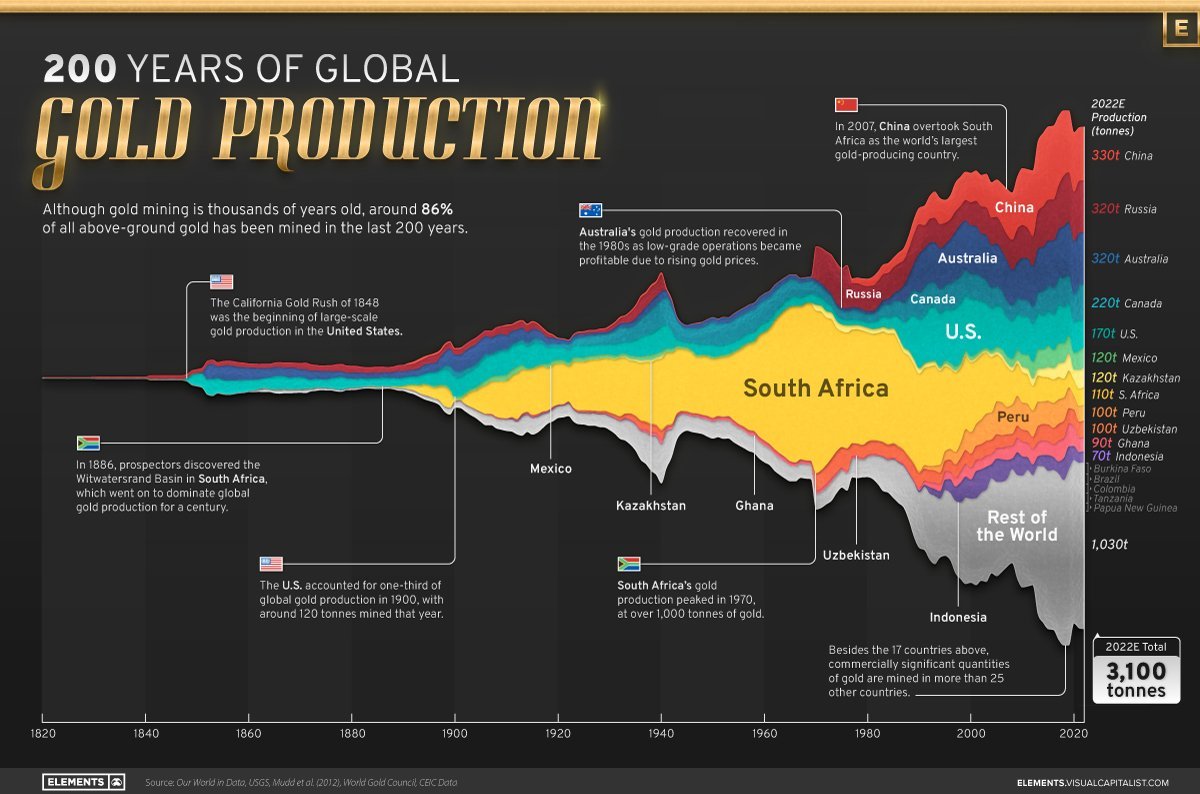
As intelligence improves, extraction improves. Resource discovery improves. Construction improves. Logistics improves. The supply curves of physical goods and services shift outward. Gold becomes easier to mine. Housing becomes easier to build. Manufacturing becomes more efficient.
Abundance accelerates.
Traditional stores of value depend on difficulty of replication. Intelligence reduces that difficulty across domains. Over long enough time horizons, intelligence pressures almost everything.
This creates a strange and unstable environment for capital allocation.
People feel this shift before they understand it.
They save more and trust less. They diversify because conviction feels dangerous. They spread capital across assets because predicting winners feels impossible. Stocks, real estate, commodities, funds, alternatives.
Diversification feels prudent.
At the same time, something else happens.
People also feel hopeless.
When savings feel fragile and effort feels disconnected from outcomes, behavior polarizes. Some people retreat into caution. Others swing toward nihilistic risk-taking. Sports betting surges. Meme stocks attract capital. Meme coins explode in popularity.
These bets are not about upside. They are about escape.
When savings melt slowly, people look for meaning in extremes they feel ordinary effort can never achieve.
Savings represent deferred effort. They reflect years of work, discipline, and planning. They depend on the idea that value today will persist into the future.
When intelligence becomes abundant, that assumption weakens.
Assets lose durability. Portfolios feel unstable. Savings feel as though they are slowly melting.
Careers face similar pressure. Many jobs exist because intelligence remains costly. As intelligence becomes cheap, work loses its usefulness. Effort stops guaranteeing preservation of value. Identity tied to profession becomes fragile.
Time begins to feel mispriced. Dignity tied to output weakens. Families feel the strain. People ask quiet questions about purpose, effort, and security.
This reaction is rational. The singularity has begun.
Intelligence and Scarcity
Money sits at the center of this tension.
Money coordinates value across time. It records contribution. It preserves purchasing power. It allows effort today to translate into security tomorrow.
As intelligence accelerates, the goods and services money is meant to measure and preserve become increasingly abundant. When money is pegged to a basket of goods (2% Consumer Price Inflation target) whose production intelligence continually cheapens, money itself becomes abundant. As intelligence and abundance spreads, money loses its ability to coordinate what remains scarce across time.
A system optimized for a slower world struggles under speed.
This brings the focus back to January 3, 2009.
That date coincided with the quiet launch of a tool designed for a different future. A system that introduced something humanity had never seen before.
“We shape our tools and thereafter our tools shape us.” – Marshall McLuhan
Perfect scarcity.
For the first time, a digital object existed with a perfectly fixed supply enforced by mathematics rather than trust. Ownership was cryptographic. Verification was decentralized.
No authority could change the rules. No intelligence could increase the supply.
This was a terminal discovery.
Perfect digital scarcity alters incentives.
When wealth is stored in assets that intelligence can replicate, intelligence receives a signal to replicate them. Store wealth in gold and the incentive to extract more increases. Store wealth in housing and construction accelerates. Store wealth in companies and competition attacks profit margins.
Store wealth in something that cannot be replicated and intelligence encounters a boundary.
That boundary changes capital flows.
Capital moves toward what resists dilution. This movement occurs through incentives rather than belief, like gravity pulling water over a waterfall.
Zero represents complete nothingness. There cannot be more nothing than nothing. A wheel represents perfect rotation. It cannot become more round.
Perfect scarcity functions the same way. It admits no optimization at the monetary layer. Interfaces evolve. Technology improves. Cryptography upgrades. Usability advances. The perfectly fixed monetary policy remains.
That immutability matters.
As intelligence collapses the cost of production, wealth needs an anchor that intelligence cannot erode. Wealth generated by abundance needs a place to rest.
Savings melt unless it is anchored to something intelligence cannot create more of.
As value concentrates toward assets immune to replication, distortions elsewhere ease. Housing becomes a place to live rather than a store of excess capital. Gold and silver extraction loses speculative pressure. Capital concentrates in perfect digital scarcity, while productive enterprises receive allocation only when they generate real cash flow and genuine productivity, further collapsing the cost of intelligence and further accelerating abundance.
When intelligence becomes abundant, value converges on what intelligence cannot create more of.
And that already exists.
Bitcoin introduced perfect digital scarcity into a world that would soon experience collapsing intelligence costs. It arrived before the problem became obvious. It spent years being dismissed while the infrastructure for abundance assembled around it.
Bitcoin does not compete with artificial intelligence. It completes the economic environment artificial intelligence creates.
In a world where intelligence creates abundance, wealth moves toward something truly scarce.
Bitcoin serves that role.
The singularity has begun.

Host — The Income Show
Joe Burnett is VP of Bitcoin Strategy at Strive and host of The Income Show on True North. Previously Director of Bitcoin Strategy at Semler Scientific and Director of Market Research at Unchained, he covers digital credit, Bitcoin treasury strategy, and long-term Bitcoin research.